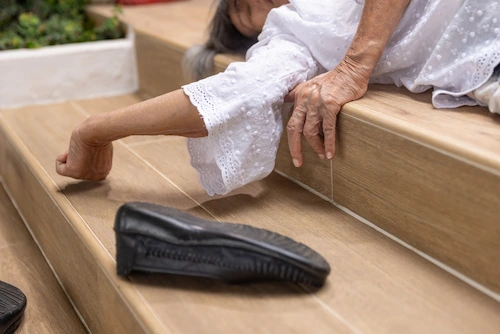
Recovering from a fall down the stairs can be tough, physically and mentally. Whether you have minor injuries or more serious issues like broken bones, spinal cord damage, or a traumatic brain injury, you need to take the right steps. Seek immediate medical care for serious injuries.
When careless property owners ignore safety risks, they may be liable if someone is injured falling down the stairs. A skilled Augusta personal injury lawyer can help you understand your rights and options.
This blog explains the immediate steps to take after a staircase injury and how to prevent future falls. It also explains when you may have a premises liability claim in Georgia, who may be responsible, and what compensation you may be able to recover.
Immediate Steps After a Fall Down the Stairs
Falling down the stairs can be scary and dangerous. Knowing what to do immediately after the fall can make all the difference in your recovery and safety.
Stay Calm and Take Stock
After a fall down the stairs, stay calm. Panic will cloud your thinking. Take a deep breath and collect your thoughts. Take stock of your surroundings and yourself. This initial self-assessment will help you determine how bad your injuries are.
Check for Serious Injuries
Look for signs of serious injuries, such as head injuries. These can include unconsciousness, severe headaches, nausea, uncontrollable bleeding, or loss of feeling in any part of your body. Additionally, falling down the stairs can lead to more serious injuries like broken bones and spinal injuries. If you think you have a serious injury, don’t move. Moving can make some injuries worse, especially spinal cord injuries or fractures.
Get Medical Attention
If you see any signs of serious injury, get medical attention right away. You need to go to the emergency room for evaluation. Even if you feel fine, some injuries like internal bleeding or concussions may not show up right away. A medical professional can assess you and make sure you get the right care.
Gather Evidence if You Fall on Someone Else’s Property
If you are hurt in a fall down the stairs on someone’s property or at a business, try to do the following as soon as you can:
- Take photos of the stairs and whatever caused your fall.
- Get the names and phone numbers of anyone who saw what happened.
- Report the fall to the owner or manager.
- Talk with a Georgia personal injury lawyer.
You may have a legal case against a property owner or manager.
Common Injuries From Falling on the Stairs
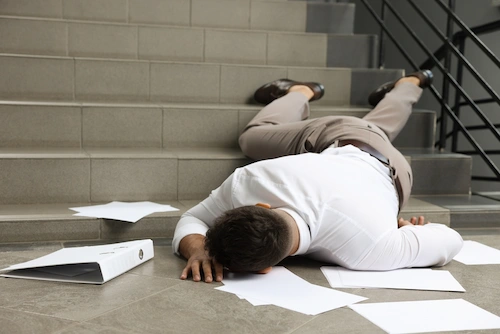
Assessing the injuries after a fall is key to getting the right treatment and preventing further complications, even if the injuries are minor and may not show up right away. Stair-related fall injuries often include sprains and strains, with a 2017 study indicating that these account for about one-third of such incidents.
After a fall down the stairs, you may have various stair-related injuries, with lower body injuries being the most common. It’s important to know what these injuries are so you can get the right care. Common injuries are:
- Broken Bones: Fractures happen in the arms, legs, or wrists when you try to break your fall.
- Traumatic Brain Injuries (TBIs): A fall can cause concussions or more severe brain injuries if your head hits a hard surface.
- Spinal Cord Injuries (SCIs): Damage to the spinal cord can be serious and affect mobility.
- Internal Bleeding: Falls can cause internal injuries that are not visible. Symptoms can include abdominal pain or swelling.
- Back Pain: Strains or sprains in the back are common and cause discomfort and mobility issues.
- Soft Tissue Damage: This includes injuries to muscles, ligaments, and tendons and can cause swelling and pain.
What to Watch For
After a fall, you need to watch your body for symptoms of serious injuries. Watch for:
- Back Pain: Back pain that persists or is severe means you have a serious injury.
- Headaches: Severe or worsening headaches mean you may have a concussion or brain injury.
- Sensitivity to Light or Noise: These symptoms are associated with TBIs.
- Blurry Vision: Difficulty seeing means you may have a head injury.
- Swelling: Noticeable swelling anywhere, especially the head or limbs, needs to be evaluated.
- Muscle Weakness: Weakness in the arms or legs means nerve or spinal cord damage.
- Numbness in Extremities: Loss of feeling in hands or feet needs immediate medical attention.
Do You Have a Premises Liability Case in Georgia?
“Premises liability” is the legal term for holding a property owner responsible when someone gets hurt because the property wasn’t safe. In Georgia, people who own or run a property must take reasonable steps to keep it safe for visitors. If they don’t, and you get hurt as a result, you may be able to recover compensation.
If you fell down the stairs, you may have a claim if something about the stairs was unsafe, the owner knew or should have known about it, and they didn’t fix it or warn you. Here are some common stair problems that lead to these claims:
- Broken, loose, or cracked steps
- Handrails that are missing, wobbly, or don’t run the full length of the stairs
- Dark stairwells or burned-out lights
- Steps that aren’t the same height or depth
- Torn, loose, or worn-out carpet on the steps
- Slippery steps from water, spills, ice, or shiny floors
- Trash, boxes, or other objects left on the stairs
Property Owner Knowledge
One of the most important questions is whether the owner knew about the problem. You don’t always need proof that they actually knew. It can be enough to show they should have known. For example, if a handrail had been loose for months or a stairwell light had been out for weeks, a careful owner would have noticed and fixed it.
Responsibilities to Customers vs. Social Guests
Why you were on the property can also matter. Georgia law gives the strongest protection to people who are there for business reasons, like shoppers, customers, tenants, and hotel guests. Owners have to actively look for dangers and fix them for these visitors. If you were a social guest, such as a friend visiting someone’s home, the owner still has duties to you, but they are more limited.
The Deadline for Georgia Premises Liability Claims
Don’t wait too long. In most cases, you have two years from the day you were hurt to file a personal injury lawsuit in Georgia. If the fall happened on government property, the deadline to take your first steps can be much shorter.
How to Recover If You Fall Down the Stairs
Medical recovery after a fall is key to getting back to normal and minimizing long-term complications.
Get Professional Medical Attention
After a fall, you need to get a medical professional to evaluate you. A doctor will give you a diagnosis and tell you the extent of your injuries. They will assess you and tell you what to do. This may include referrals to specialists like orthopedic surgeons or neurologists depending on your injuries.
Tests
To confirm the diagnosis and find hidden injuries, tests may be done. Common tests are:
- X-rays: To detect broken bones and fractures.
- MRIs: To examine soft tissue injuries like ligament and muscle damage.
- CT scans: To see internal injuries like internal bleeding.
These tests will help create a treatment plan specific to you.
Follow Treatment
Follow your doctor’s treatment plan for a successful recovery. This may be:
- Rest: Let your body heal.
- Medication: Pain relievers or anti-inflammatory meds may be prescribed to manage pain.
- Physical therapy: Doing rehab exercises will help you move and get strong.
Following these will help you heal and minimize complications. Remember, you are the key to a full recovery.
Physical Therapy
Once a doctor evaluates your injuries, they may recommend physical therapy. Physical therapy is key to getting you moving and strong. A physical therapist will create a personalized plan with exercises specific to you. Common treatments are stretching, strengthening exercises, and balance training. Consistency with physical therapy will get you back faster and better.
Pain Management
Pain management is part of the recovery process. Your doctor may prescribe pain relievers or anti-inflammatory meds to manage discomfort. Also consider alternative pain management techniques like heat therapy, acupuncture, or relaxation exercises. Find what works for you, and you’ll be more comfortable as you recover.
Address the Mental and Emotional Impact
Falling down the stairs is more than physical. The emotional impact is big. Many people experience anxiety, depression, or even PTSD after such an incident. You need to acknowledge these feelings and address them. Seeking counseling can be helpful.
Other ways to support your emotional recovery include spending time with family and friends, doing hobbies, or joining support groups. Techniques like meditation, deep breathing exercises, and yoga can help reduce stress.
Who Can Be Liable for Staircase Injuries in Georgia?
When you fall down the stairs on someone else’s property, it’s not always clear who is responsible. Sometimes more than one person or company is to blame. Finding everyone who may be responsible can help you get the full amount of money you need to recover. Here are the people and groups who may be held responsible.
Property Owners
The person or company that owns the home or building is often responsible when someone falls down the stairs. Owners are expected to check their property for problems, make repairs, and warn visitors about dangers that aren’t easy to see. If an owner ignored a broken step or never put up a handrail, they may have to pay for your injuries.
Landlords
If you rent your home or apartment, Georgia law says your landlord must keep the property in good repair. If you fell down the stairs because of a problem the landlord should have fixed, the landlord may be responsible. This is especially true for shared stairs, outdoor steps, and hallways the landlord controls, or for problems you reported that never got fixed.
Businesses
Stores, restaurants, hotels, gyms, offices, and other businesses must keep their spaces safe for customers and visitors. If you fall at a business because of a spill, bad lighting, or a damaged step, the business may be responsible, even if it rents the building instead of owning it.
Property Management Companies
Many apartment complexes, condos, and office buildings hire a management company to handle everyday upkeep and repairs. If that company was in charge of keeping the stairs safe and didn’t do its job, it may be partly or fully responsible for your injuries.
Maintenance Contractors
Owners often hire outside workers to build, fix, or clean stairs. If a contractor put in a handrail the wrong way, did a poor repair job, mopped the stairs without putting up a “wet floor” sign, or didn’t follow building safety rules, they may be responsible if their work caused your fall.
Cities, Counties, and Other Government Agencies
If you fell down the stairs at a public place, like a courthouse, library, public school, or park, a city, county, or state agency may be responsible. These cases have special rules and much tighter deadlines. It’s smart to talk with a lawyer right away after a fall on public property.
What Compensation Can You Seek in a Staircase Injury Claim?
If you fell down the stairs because a property owner or someone else didn’t keep the stairs safe, Georgia law allows you to seek money called “compensation” or “damages.” It’s meant to help pay for the costs of your injuries and make up for the ways the fall has affected your life.
Depending on your situation, you may be able to recover money for:
- Medical bills, including emergency room visits, hospital stays, surgery, doctor visits, medicine, and physical therapy
- Future medical care you may need as you continue to heal
- Lost wages for the time you had to miss work
- Lost future income if your injuries keep you from working or earning as much as you did before
- Pain and suffering from the physical pain, anxiety, fear, and depression after the fall
- Loss of enjoyment of life if you can no longer do the activities and hobbies you used to enjoy
Preventing Future Falls
Preventing falls is key, especially if you’ve had an injury before. Installing safety measures and being aware of your surroundings will reduce the chances of falling down the stairs again.
Stair Safety
To make your stairs safer:
- Good Lighting: Make sure stairways are well-lit. Bright lights will help you see each step clearly, less likely to trip.
- Handrails: Install handrails on both sides of the stairs. Handrails will give you support and stability when going up or down.
- Non-Slip Treads: Consider adding non-slip treads on each step. These will prevent slipping, especially on slippery stairs.
- Clear Clutter: Keep stairs clear of objects like shoes, bags, or other items that can trip you. A clear path is key to safety.
Use Safety Features
Adding safety features will make a big difference:
- Safety Gates: Install safety gates at the top and bottom of stairs, especially if you have young children or pets. This will prevent accidental falls.
- Consider Older Adults: For older adults, additional safety features may be helpful. This includes grab bars and non-slip mats.
Don’t Get Distracted
Stay focused when using stairs:
- Limit Distractions: Don’t use your phone or talk while on the stairs. Distractions will lead to accidents.
- Take Your Time: Always take your time when going up or down the stairs. Rushing will increase the chances of falling.
Contact Our Georgia Personal Injury Lawyers Today!
If you or a loved one fell down the stairs because someone else was careless, our team at 1Georgia Personal Injury Lawyers is here to help. With our experience in handling personal injury cases throughout Georgia, we can guide you through the legal process and work to secure the compensation you deserve.
Contact us at 404-476-5412 for a free consultation today!